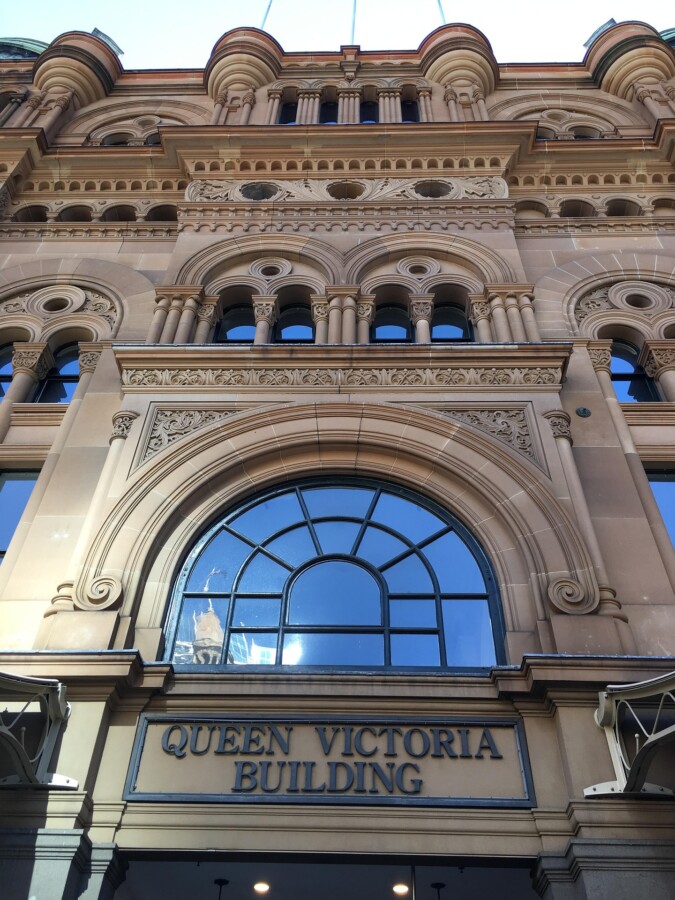
The Queen Victoria Building (QVB), an architectural gem in the heart of Sydney, was constructed to both honour Queen Victoria’s Diamond Jubilee and serve a very practical purpose for the city. Originally, the QVB was designed to replace the Sydney Markets, creating a versatile marketplace amidst a city gripped by recession. The building’s Romanesque Revival style, conceived by architect George McRae, added grandeur and a touch of elegance to everyday commerce.
You might be intrigued to know that this grand landmark wasn’t merely a marketplace. It was envisioned as a multifaceted structure that included a concert hall, offices, and retail spaces. This thoughtful design aimed to revitalise the economic environment of Sydney and provide a community hub during challenging times.
Walking through the QVB today, you experience a living piece of history. The towering glass and copper domes, elaborate tile work, and elegant arches not only tell a story of past prosperity but continue to captivate visitors and locals alike. This iconic structure stands as a testament to Sydney’s resilience and its ability to turn practicality into enduring beauty.
Table of Contents
Historical Significance

The Queen Victoria Building (QVB) serves as a key architectural and cultural landmark in Sydney, blending rich history with remarkable design. This section details its design and commission, its opening and early use, and the historical challenges it faced.
Design and Commission
Designed by 28-year-old architect George McRae, the Queen Victoria Building was constructed between 1893 and 1898. McRae opted for elaborate Romanesque Revival architecture, making the building stand out with its detailed stonework, grand arches, and lofty domes.
Replacing the original Sydney Markets, the QVB honours Queen Victoria’s Diamond Jubilee. The entire project was commissioned to convey both luxury and commemoration in equal measure.
Opening and Early Use
The QVB officially opened in 1898, occupying a full city block bounded by George, York, Druitt, and Market Streets. Initially, it housed a concert hall, shops, and showrooms, aiming to boost morale during Sydney’s severe recession.
Its elegant design quickly made it a central hub for the community. Even from the beginning, it was a functional and social centre of Sydney, reflecting the city’s ambitions and resilience.
Historical Challenges
The QVB did not always enjoy stability. Historical challenges emerged, including proposals for demolition during periods of neglect and financial strain. Although the building faced such threats, its architectural significance and public support led to restorative efforts rather than outright demolishment.
Significant restorations took place in the 1980s, reviving the historical grandeur while modernising facilities. These efforts ensured the QVB remained an integral part of Sydney’s commercial and cultural landscape.
Architectural Details

The Queen Victoria Building, located in the heart of Sydney, is an architectural marvel. This section explores the Romanesque Revival style and the intricate structural elements that make the QVB a historical gem.
Romanesque Revival Style
The QVB exemplifies the Romanesque Revival style, characterized by its use of rounded arches and symmetrical forms. Designed by George McRae, the building features elaborate stone carvings and robust masonry. Sandstone, widely used in its construction, adds to its stately appearance.
Balustrades and arches provide a sense of grandeur and structural balance. Stained glass windows, with intricate designs, enhance the building’s aesthetic and allow for magnificent natural light. Overall, the Romanesque Revival style integrates both form and function, reflecting the architectural tastes of the late 19th century.
Structural Elements
A prominent feature of the QVB is its central dome. This majestic structure is complemented by smaller copper domes, creating an impressive skyline. The central dome, adorned with intricate craftsmanship, serves as the focal point of the building.
Inside, the arcades showcase elaborate ironwork and original tiling, or faithful reproductions, which add to the historical ambiance. The stairwells, with their detailed balustrades, exhibit exceptional craftsmanship and attention to detail.
Altogether, these structural elements not only support the building’s architectural integrity but also define its unique aesthetic. The combination of these features creates an immersive experience for visitors, capturing both the historical and architectural significance of the QVB.
Cultural and Civic Importance

The Queen Victoria Building (QVB) in Sydney stands as an essential cultural and civic landmark. Its transformation from a bustling marketplace to a heritage icon highlights its lasting impact on the city’s social and cultural life.
Social Hub of the Past
The QVB was more than just a marketplace. It served as a crucial gathering point for Sydney’s populace. The building housed concert halls, showrooms, and galleries, turning it into a vibrant centre for cultural activities. People from all walks of life would come together, making it a melting pot of social interaction.
Back in the day, the Tea Room inside QVB was a popular spot where people could relax and socialise. The presence of the City Library within its confines further emphasised its role in promoting education and cultural enrichment. The QVB was indeed more than just a place for commerce; it was the heart of the city’s social and cultural exchange.
Modern-Day Landmark
Today, the QVB stands proudly as a heritage-listed structure, recognised for its architectural significance and historical importance. After significant renovations, it now features a mix of retail spaces and exhibition areas, attracting both tourists and locals. The presence of a Civic Square adjacent to it adds to its modern-day civic importance.
The QVB continues to serve as a symbol of Sydney’s rich history and vibrant culture. It’s not just a shopping destination but a cultural treasure that regularly hosts various events. Even Queen Elizabeth II visited the QVB, marking it as an undeniable symbol of reverence and tradition. The building’s enduring appeal underscores its vital role in both the past and present-day Sydney.
Restoration and Preservation
The Queen Victoria Building (QVB) in Sydney is a prime example of how architectural heritage can be preserved through meticulous restoration efforts. These efforts have ensured that the QVB continues to be a cornerstone of cultural and historical identity in Sydney.
Twentieth-Century Changes
Throughout the mid-20th century, the Queen Victoria Building faced significant challenges. From 1959 to 1971, the possibility of demolition loomed over this iconic structure. Various plans to replace the building with a car park or office space were considered. In response to public outcry, a major restoration project was initiated.
In 1982, the Malaysian company Ipoh Garden was granted a 99-year lease for the QVB. This agreement included a comprehensive restoration project aimed at reviving the building’s original splendour. The restoration, completed in 1986, involved both structural and aesthetic rehabilitation. Efforts were guided by original architectural plans and historical records to restore the building’s Romanesque Revival features.
Preserving a Masterpiece
In subsequent years, further projects were undertaken to maintain the QVB’s integrity. Notably, a major refurbishment in 2009 with a budget of $48 million aimed to balance historical preservation with contemporary use. The restoration focused on elements like stained glass, tiled floors, and the intricate dome that crowns the building.
The preservation of the QVB also involved its listing on the State Heritage Register. This designation underscores the building’s importance and ensures ongoing protection. The National Trust of Australia has also recognised the QVB for its historical and architectural significance. These combined efforts highlight the commitment to maintaining the building’s status as a vital part of Sydney’s history and landscape.
The QVB Today

Today, the Queen Victoria Building (QVB) is a bustling centre for shopping, dining, and tourism. It combines its rich historical legacy with modern amenities, making it a prime destination for both locals and tourists.
Shopping and Dining Experience
When you step into the QVB, you’re greeted by an array of high-end boutiques, retail stores, and speciality shops. Here, you can find everything from designer fashion to unique Australian souvenirs. The arcade-style layout features a mix of international brands and local artisans, providing a diverse and exciting shopping experience.
Dining at the QVB offers something for everyone. Upscale restaurants serve gourmet dishes, while cosy coffee shops provide the perfect spot to relax with a cappuccino. They cater to a range of tastes, from delectable pastries to five-star dining. Din Tai Fung and The Tea Room are notable mentions, known for their premium quality and exquisite atmosphere.
Architectural Icon and Tourist Destination
The QVB stands as an architectural marvel in the heart of Sydney. Its Romanesque Revival design, complete with intricate stained glass windows, grand staircases, and a magnificent central dome, continues to attract architecture enthusiasts from around the world. This blend of Gothic and Art Deco elements enriches the building’s historic charm.
As a tourist destination, the QVB offers guided tours that delve into its history, allowing visitors to appreciate its grandeur and learn about its transformation over the years. The building itself is a cultural landmark, making it an essential stop for anyone exploring Sydney’s central business district.
Urban Context
The Queen Victoria Building (QVB) plays a crucial role in Sydney’s urban fabric. Its location and historical significance have influenced the development of the city’s central business district (CBD).
Integration within Sydney CBD
The QVB is centrally located at 429-481 George Street, occupying a city block bounded by Market Street, George Street, Druitt Street, and York Street. This prime positioning within the Sydney CBD makes it a focal point for the surrounding area.
George Street, one of Sydney’s major thoroughfares, runs along the building, providing significant visibility and accessibility. The building is well-integrated with public transport, including buses and the Town Hall railway station, enhancing its connectivity.
The structure’s grand Romanesque Revival architecture, designed by George McRae, serves as a visual anchor in the bustling CBD, distinguishing the shopping and cultural precinct.
Significance to Sydney’s Development
When constructed between 1893 and 1898, the QVB replaced the original Sydney Marketplace. Its establishment was part of a broader effort to modernise Sydney during a severe recession, aiming to create jobs and invigorate the local economy.
Over time, the QVB became more than a commercial hub. It evolved into a heritage-listed landmark recognised on the New South Wales State Heritage Register, signifying its importance to Sydney’s cultural and architectural history.
The building’s renovation in the 1980s restored its architectural splendour and reaffirmed its value in the urban landscape. Thus, the QVB has continuously contributed to Sydney’s development, blending historical significance with modern utility.