If you’re planning a trip to Australia, the Blue Mountains are a must-see destination. Located just a short drive from Sydney, these stunning mountain ranges offer breathtaking views and a unique natural wonder that leaves visitors in awe. But why do the Blue Mountains look blue? In this article, we’ll explore the science behind this phenomenon and what makes the Blue Mountains such a remarkable place to visit.
Table of Contents
The Science Behind the Blue Mountains

Contrary to popular belief, the Blue Mountains don’t actually appear blue because of the mountains themselves. The blue hue is actually caused by the scattering of light. When sunlight hits the atmosphere, it’s scattered in all directions by air molecules. Blue light is scattered more than other colors because it travels as shorter, smaller waves. This is why the sky appears blue on a clear day.
When you’re standing in the Blue Mountains, you’re looking out over a vast expanse of eucalyptus trees. These trees release a fine mist of eucalyptus oil into the atmosphere, which combines with dust particles and water vapor to create a blue haze. This haze gives the mountains their distinctive blue appearance.
Must-See Blue Mountain Attractions
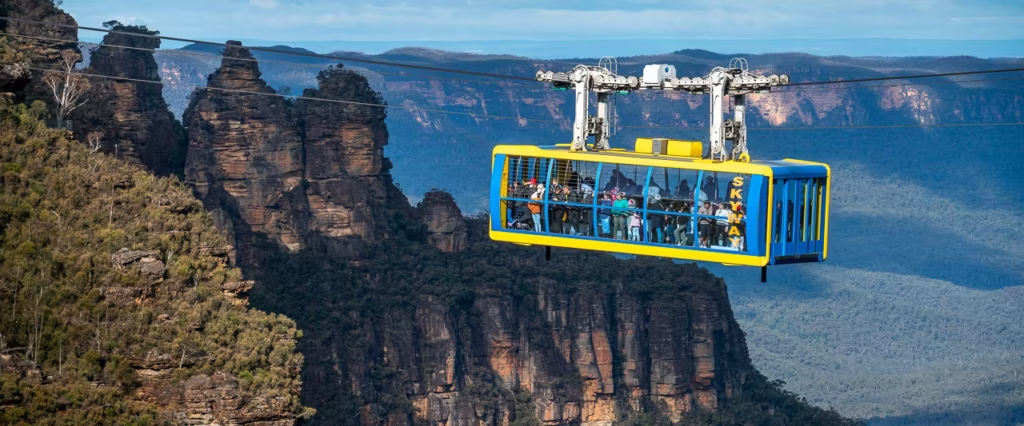
Now that we’ve explained why the Blue Mountains look blue, it’s time to explore some of the must-see attractions in the area. One of the most popular spots is the Three Sisters, a rock formation that towers over the Jamison Valley. Legend has it that the three sisters were turned to stone by a witch doctor to protect them from harm.
Another popular attraction is the Scenic World, which offers visitors a chance to ride the steepest railway in the world, the Scenic Railway. This thrilling ride takes you deep into a valley, offering stunning views of the surrounding landscape.
For those who enjoy hiking, the Blue Mountains offer a variety of trails for all skill levels. The National Pass is a popular trail that takes you through lush rainforests, past waterfalls and over suspension bridges. The Grand Canyon Walk is another popular option, offering stunning views of the canyon and the surrounding mountains.
Planning Your Trip to the Blue Mountains

If you’re planning a trip to the Blue Mountains, there are a few things you should keep in mind. The best time to visit is during the spring or fall, when the weather is mild and the crowds are smaller.