
The Sydney Opera House stands as an iconic symbol of modern Australia, captivating visitors from around the world with its distinctive silhouette on Sydney Harbour. The Sydney Opera House is 51 years old, having officially opened on 20 October 1973. This architectural marvel has become synonymous with Australia’s cultural identity and serves as a major tourist attraction.
You might be surprised to learn that the Opera House’s construction was fraught with challenges. The project, which began in 1959, took 14 years to complete – significantly longer than the initial estimate of four years. Despite the delays and controversies, the result was a masterpiece that has stood the test of time, earning UNESCO World Heritage status in 2007.
When you visit the Sydney Opera House, you’re not just seeing a building; you’re experiencing a piece of living history. Its unique design, featuring shell-like roof structures, has made it one of the most photographed buildings in the world. The Opera House continues to play a vital role in Australia’s cultural landscape, hosting over 1,500 performances annually and welcoming millions of visitors each year.
Table of Contents
Historical Significance

The Sydney Opera House stands as an architectural marvel and cultural icon, embodying Australia’s artistic spirit and innovative prowess. Its journey from concept to reality reflects a transformative era in the nation’s history.
Origins and Design Competition
In 1956, the New South Wales government launched an international design competition for a new opera house at Bennelong Point. The contest attracted 233 entries from 32 countries, showcasing a global interest in shaping Sydney’s skyline. Jørn Utzon, a relatively unknown Danish architect, submitted his groundbreaking design. His vision of sail-like shells perched on a massive platform captivated the judges, leading to his victory in 1957.
The competition’s success highlighted Australia’s ambition to create a world-class performing arts centre. It marked a pivotal moment in the country’s cultural development, signalling a shift towards embracing bold, modern architecture on an international stage.
Jørn Utzon’s Vision
Utzon’s design revolutionised architectural thinking. His concept featured a series of interlocking vaulted ‘shells’ that seemed to float above the harbour. This innovative approach presented enormous engineering challenges, pushing the boundaries of construction technology.
Utzon’s vision went beyond aesthetics. He aimed to create a space that would enhance the performing arts experience for both artists and audiences. His design incorporated cutting-edge acoustics and sightlines, setting new standards for concert hall design worldwide.
Despite facing numerous obstacles during construction, Utzon’s persistence and creativity resulted in an architectural masterpiece that continues to inspire designers and artists today.
World Heritage Status
In 2007, UNESCO inscribed the Sydney Opera House on the World Heritage List, recognising its outstanding universal value. This prestigious designation acknowledges the building’s significance as a masterpiece of 20th-century architecture.
The Opera House’s inclusion on the list celebrates its:
- Innovative structural design
- Influence on architecture worldwide
- Harmonious integration with its harbour setting
Queen Elizabeth II officially opened the Sydney Opera House on 20 October 1973. Since then, it has become Australia’s most recognisable landmark and a symbol of the nation’s cultural identity. The building’s heritage status ensures its preservation for future generations, solidifying its place in global architectural history.
Architectural Marvel
The Sydney Opera House stands as an iconic testament to innovative design and engineering. Its distinctive form and groundbreaking construction techniques have cemented its place as one of the world’s most recognisable buildings.
Engineering Feats and Challenges
The Opera House’s complex geometry presented numerous engineering hurdles. Ove Arup and Partners tackled these challenges head-on, developing novel solutions to bring Jørn Utzon’s vision to life. The team used early computer technology to calculate the precise curves of the shells, a revolutionary approach for the time.
The building’s foundation required careful consideration due to its harbour-side location. Engineers designed a massive concrete platform to support the structure, anchoring it securely to the bedrock below.
One of the most significant challenges was creating the self-supporting roof shells. The solution came in the form of ribbed concrete sections, pre-cast on site and lifted into place using custom-built cranes.
The Distinctive Shells Design
The Opera House’s most striking feature is its soaring white shells. These weren’t just an aesthetic choice but a brilliant solution to the building’s acoustic requirements.
Utzon’s initial concept featured parabolic shells, but these proved impractical to build. The team eventually settled on spherical geometry, deriving all shell shapes from sections of a sphere. This approach allowed for standardised construction methods while maintaining the building’s fluid, organic appearance.
The shells’ ribbed structure not only provides strength but also creates the perfect surface for the millions of ceramic tiles that give the Opera House its distinctive sheen.
Innovation in Concrete and Ceramics
The Opera House pioneered new uses for concrete in architecture. The structure utilises precast concrete elements extensively, allowing for precise control over quality and shape.
The roof’s ceramic tiles presented another unique challenge. After an exhaustive search, the team chose tiles from Swedish manufacturer Höganäs. These tiles, with their self-cleaning glazed finish, maintain the Opera House’s pristine appearance despite exposure to salt air and pollution.
The tile installation process was equally innovative. Workers developed a system of attaching tiles to precast concrete panels, which were then hoisted into place on the shells. This method ensured uniform appearance and simplified maintenance.
Cultural and Performing Arts Centre
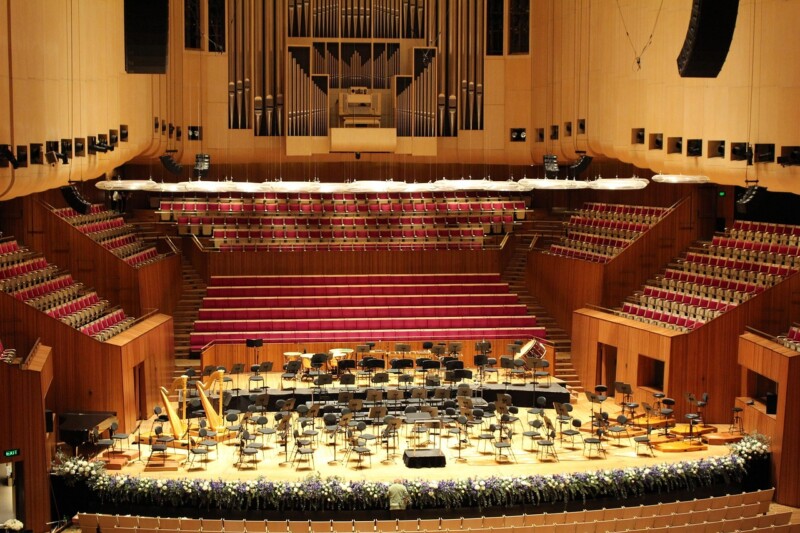
The Sydney Opera House stands as Australia’s premier cultural hub, hosting an array of performances and events across its diverse venues. It serves as a beacon for the arts, drawing talent and audiences from around the globe.
Major Venues and Spaces
The Concert Hall, the largest venue in the Opera House, seats over 2,000 people. It’s home to the Sydney Symphony Orchestra and hosts classical concerts, contemporary performances, and talks.
The Joan Sutherland Theatre, named after the renowned Australian soprano, is the main stage for Opera Australia and The Australian Ballet. With excellent acoustics and sightlines, it’s a favourite among performers and audiences alike.
The Studio offers a more intimate setting for experimental works and emerging artists. Its flexible configuration allows for diverse performances, from cabaret to stand-up comedy.
The Forecourt, an outdoor space with the iconic sails as a backdrop, hosts large-scale concerts and events. It’s particularly popular during summer festivals.
Notable Performances and Events
You’ll find a rich tapestry of performances at the Opera House. Dame Joan Sutherland’s farewell performance in 1990 was a highlight in the venue’s history.
The Opera House has welcomed international stars like Ella Fitzgerald, Bob Dylan, and Coldplay. It’s also been the site of world premieres for Australian works.
Annual events like the Sydney Festival and Vivid Sydney use the Opera House as a centrepiece, transforming its sails into a canvas for light installations.
Role in the Arts Community
The Opera House plays a crucial role in nurturing Australian talent. It runs development programs for emerging artists and composers.
You’ll find it actively engages with the community through education initiatives. School excursions and workshops introduce young Australians to the performing arts.
The venue’s commitment to accessibility includes audio-described performances and relaxed shows for those with sensory sensitivities.
As a UNESCO World Heritage site, the Opera House balances its role as a working arts centre with its status as a cultural icon. It continues to shape Australia’s artistic landscape, fostering creativity and innovation.
Location and Accessibility
The Sydney Opera House occupies a prime waterfront position that offers stunning views and easy access. Its unique location enhances both its architectural beauty and practical accessibility for visitors.
Bennelong Point and Sydney Harbour
The Sydney Opera House sits majestically on Bennelong Point, a peninsula jutting into Sydney Harbour. This spot provides breathtaking 360-degree views of the harbour, including the iconic Sydney Harbour Bridge. The site was once home to Fort Macquarie, built in 1817, before being transformed into a tram depot. In 1957, the New South Wales government chose this location for the new opera house, recognising its potential to create a world-class landmark.
Integration with Sydney’s Landscape
The Opera House’s design brilliantly complements its surroundings. Its white shell-like roof sails echo the many boats gliding across the harbour, while the building’s stepped podium mimics the sandstone cliffs common along Sydney’s coastline. You can easily reach the Opera House from Circular Quay, a major transport hub. Ferries, buses, and trains all stop here, making it accessible for both locals and tourists. The short walk from Circular Quay to the Opera House offers spectacular views of the building as you approach.
Cultural Influence and Symbolism

The Sydney Opera House’s distinct design and prominent harbour location have made it an enduring symbol of Australia. Its cultural impact extends far beyond its role as a performing arts venue.
As a National Identity
You’ll find the Sydney Opera House featured prominently in tourism campaigns and advertisements promoting Australia. Its unique silhouette adorns countless souvenirs, from t-shirts to keychains. The building has become shorthand for modern Australia – a visual representation of the nation’s creativity and innovation.
For many Aussies, the Opera House embodies their country’s coming of age on the world stage. Its daring design and challenging construction process mirror Australia’s own journey towards cultural confidence and independence. The structure’s completion in 1973 marked a pivotal moment in the country’s artistic development.
Global Recognition
The Sydney Opera House’s fame extends well beyond Australia’s shores. It’s one of the most photographed buildings in the world, instantly recognisable to people who’ve never set foot in Sydney. UNESCO added it to the World Heritage List in 2007, cementing its status as a site of outstanding universal value.
The building’s architect, Jørn Utzon, won the prestigious Pritzker Prize in 2003, largely due to his work on the Opera House. This recognition highlighted the structure’s importance in the realm of modern architecture. The Opera House welcomes over 10 million visitors annually, making it one of Australia’s most popular tourist attractions.
Controversies and Challenges
The Sydney Opera House’s journey from conception to icon was far from smooth. Its construction and design sparked heated debates, while acoustical issues plagued performances for decades.
Construction and Political Issues
The Opera House’s construction was marred by delays, cost overruns, and political turmoil. The initial budget of $7 million ballooned to $102 million by completion. This massive overspend caused public outrage and political fallout.
In 1966, the project hit a crisis point. Jørn Utzon, the original architect, resigned amid disputes with the NSW government. His departure sparked protests from the arts community and divided public opinion.
Peter Hall took over as chief architect, but the change in leadership led to significant design alterations. These changes further fueled controversy and debate about the building’s final form.
Acoustical Criticisms and Renovations
Despite its stunning exterior, the Opera House faced harsh criticism for its acoustics. Musicians and conductors complained about poor sound quality in the main concert hall.
The venue’s design prioritised visual aesthetics over acoustic performance. This led to ongoing issues with sound reflection and clarity.
In 2015, a major renovation project began to address these longstanding problems. The $150 million upgrade aimed to improve acoustics and modernise the building’s facilities.
Notably, American singer Paul Robeson was the first to perform at the Opera House site in 1960, years before completion. His impromptu concert highlighted the venue’s potential, despite the controversies that followed.
Anniversaries and Events
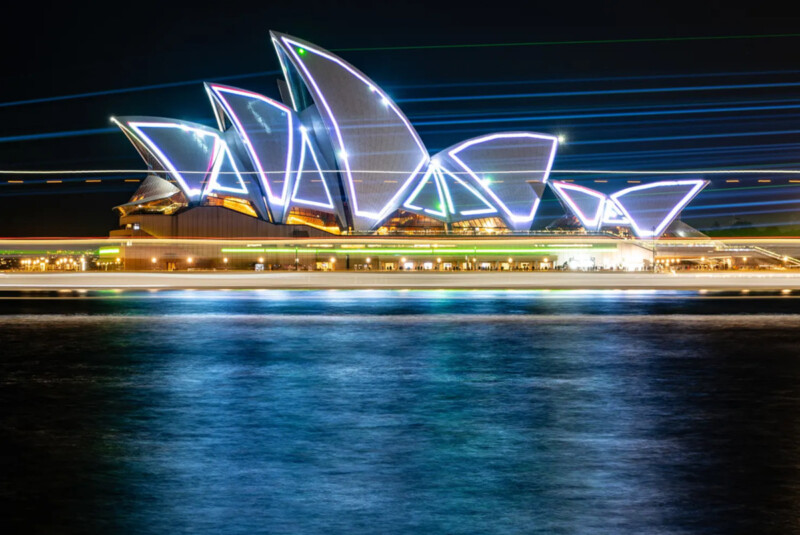
The Sydney Opera House has hosted numerous significant events and celebrated major milestones since its opening. These occasions have showcased the iconic building’s cultural importance and global appeal.
50th Anniversary Celebrations
In 2023, the Sydney Opera House marked its 50th birthday with a spectacular array of events. The celebration included over 230 performances, exhibitions, and activities spread across 50 consecutive days. You could enjoy rare archival recordings spanning opera, classical music, dance, and theatre. The Opera House offered $10 forecourt concerts, giving everyone a chance to be part of the festivities. Free public art installations adorned the precinct, creating a festive atmosphere for visitors.
To commemorate this milestone, the Opera House released unseen photos from the Getty Images archives, providing a glimpse into its rich history. These rare images captured key moments from the past five decades, showcasing the building’s enduring significance.
High-Profile Appearances
Throughout its history, the Sydney Opera House has welcomed numerous dignitaries and hosted significant events. During the 2000 Olympic Games, the building served as a stunning backdrop for the torch relay and various ceremonies. You might remember the breathtaking fireworks displays that lit up the harbour, with the Opera House at the centre.
Notable figures who have graced the venue include Pope John Paul II and Nelson Mandela. Their appearances underscored the Opera House’s status as a global icon. These visits often drew large crowds, eager to catch a glimpse of world leaders against the backdrop of the famous sails.
Beyond the Performances
The Sydney Opera House offers more than just world-class performances. You’ll find a wealth of experiences that showcase its cultural significance and architectural brilliance.
Educational Tours and Visitor Experiences
You can explore the Opera House’s hidden corners through guided tours. These tours take you backstage, revealing areas rarely seen by the public. You’ll learn about the building’s history, design, and construction challenges.
The visitor centre provides interactive exhibits and multimedia displays. These give you insights into the Opera House’s role as a cultural focal point.
For a unique perspective, you can join a harbour tour. These boat trips offer stunning views of the iconic structure from the water.
Architectural Prominence in Media
The Opera House’s distinctive silhouette features prominently in film, television, and photography. You’ll often spot it in establishing shots of Sydney in movies and TV shows.
Its dramatic curves and sail-like forms make it a favourite subject for photographers. Getty Images has a vast collection of Opera House photos, capturing it in various lights and angles.
The building’s image is used extensively in tourism campaigns. You’ll see it on postcards, travel brochures, and souvenirs, cementing its status as a symbol of Australia.