If you’ve ever been in Eastern Australia during New Year’s Eve, you may have noticed that the countdown to midnight seems to happen an hour earlier than it should. This is because Eastern Australia observes daylight savings time, which means that clocks are set forward by one hour during the summer months. But why does this happen, and why does it seem to affect New Year’s Eve celebrations?
Table of Contents
The history of daylight savings time in Australia

The idea of daylight savings time was first proposed by Benjamin Franklin in 1784, but it wasn’t until the early 20th century that it was adopted by various countries around the world. In Australia, daylight savings time was first introduced during World War I as a way to conserve energy. However, it wasn’t until the 1970s that it was adopted on a permanent basis.
Why does Eastern Australia celebrate New Year’s Eve an hour early?
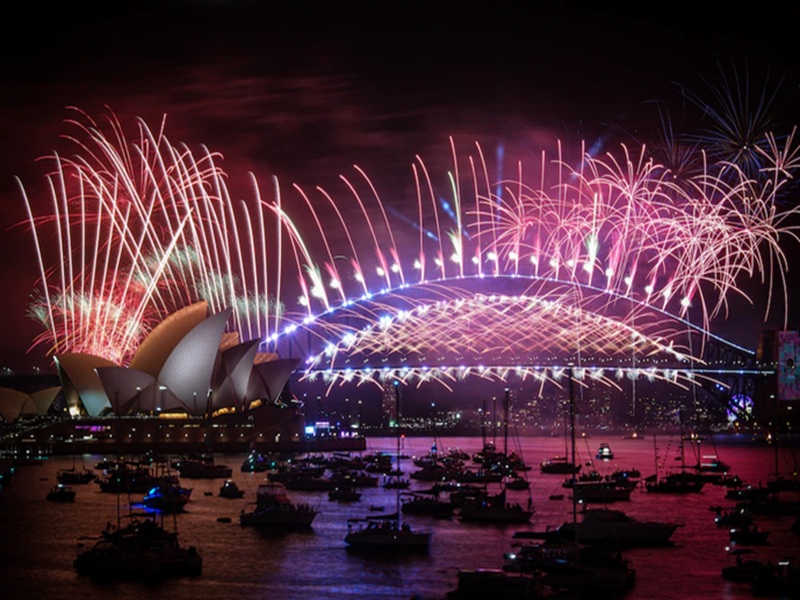
To understand why Eastern Australia seems to celebrate New Year’s Eve an hour early, we need to look at the history of time zones in Australia. Prior to the introduction of standard time zones in the late 19th century, each town and city in Australia kept its own local time based on the position of the sun. This made it difficult for the country’s growing railway network to operate efficiently, as train timetables had to be adjusted for each individual town.
To facilitate business, it was decided that Sydney and Melbourne should have the same time zone. If they used the sun position, the two cities would be 20 minutes offset in time. Train timetables can’t handle this offset, let alone business with telecommunications. As a result, the Eastern Standard Time (EST) was introduced in 1895, which set the time in Sydney and Melbourne to be exactly two hours ahead of Greenwich Mean Time (GMT).

However, during the summer months, the sun sets later in the day, which means that people in Eastern Australia can enjoy more daylight in the evenings. To take advantage of this, daylight savings time was introduced in 1971, which moves the clock forward by one hour during the summer months. This means that during daylight savings time, the time in Sydney and Melbourne is three hours ahead of GMT.